By
By OpenAI o3‑mini Released: A New Era of Cost‑Effective Reasoning
OpenAI has just unveiled the o3‑mini, a groundbreaking entry in its reasoning model lineup. Designed as the most cost‑efficient model to date, o3‑mini builds on its predecessor—the o1‑mini—to push the limits of what smaller models can achieve, particularly in STEM fields. Released on January 31, 2025, after a December 2024 preview, the model is now available both through ChatGPT and via API access on Microsoft’s Azure OpenAI Service.
A Model Built for Efficiency and Enhanced Reasoning
The o3‑mini is being hailed for its affordability and high‑performance capabilities. One of the model’s standout features is its cost-effectiveness: businesses and individual developers can now harness powerful AI at a fraction of previous costs. By design, o3‑mini not only improves reasoning over the o1‑mini but also gives users greater control over the model’s “cognitive load.”
Reasoning Effort Control and Structured Outputs
Developers have the option to dial in low, medium, or high reasoning efforts. This flexibility means that the model can “think harder” on challenging tasks when necessary or prioritize speed and efficiency for simpler queries. The model’s ability to support JSON Schema constraints ensures that outputs remain structured and well‑defined, streamlining automated workflows and integrating seamlessly with external tools.
Additionally, the new developer message attribute replaces the legacy system message, offering an even more nuanced and flexible approach to instruction handling. Meanwhile, streaming support, inherited from earlier models like the o1‑mini, guarantees that users experience reduced latency—a critical feature for time‐sensitive applications.
It is important to note that while o3‑mini excels in reasoning, it does not support vision capabilities. Developers needing visual reasoning will still have to rely on the o1 series.
Benchmarking Performance Across Domains
Recent tests have showcased the o3‑mini’s exceptional performance, especially when benchmarked against its predecessor:
- General Efficiency: The model delivers responses approximately 2.5 seconds faster on average compared to o1‑mini, with overall response times of 7.7 seconds versus 10.16 seconds. In A/B testing, users preferred its outputs 56% of the time, citing improved clarity and accuracy.
- Mathematical and Factual Reasoning: In STEM evaluations, particularly in math and coding tasks, o3‑mini consistently outperforms o1‑mini. With medium reasoning effort, it nearly matches the performance of larger models like o1 on demanding evaluations such as the AIME and GPQA Diamond.
- Competition Performance: In the realm of competitive coding, the model achieved an impressive Elo score of 2130 when operating at medium reasoning levels, outclassing all other models in its category.
- Software Engineering Benchmarks: In SWEbench‑verified tests, o3‑mini reached scores of 49.9 at high reasoning levels, and it also leads in the LiveBench coding evaluations—establishing it as a prime candidate for enterprise applications.
These performance improvements not only illustrate the model’s technical prowess but also underscore its potential for solving complex, real‑world problems more efficiently.
Diverse Use Cases and Enterprise Applications
With its strong STEM orientation and rapid processing times, o3‑mini is poised to become a key tool in several high‑demand domains:
- Enterprise AI Solutions: Businesses can leverage o3‑mini for tasks that require both speed and precision, including coding, data analysis, and intricate planning.
- Technical and Logical Problem Solving: Its enhanced reasoning capabilities make it ideal for complex scientific calculations, coding challenges, and even higher‑order business analytics.
- Automation and Integration: The model’s seamless support for functions and external tools simplifies the integration of AI into broader automated systems, making it easier for companies to scale AI‑powered processes.
Prioritizing Safety and Alignment
OpenAI has not only focused on performance but also on ensuring that o3‑mini adheres to rigorous safety protocols. The model is trained to deliberate on human‑written safety guidelines before formulating responses, a feature that has allowed it to excel in challenging safety and jailbreak evaluations—outperforming even GPT‑4o in these tests. Extensive red‑teaming and external assessments confirm that o3‑mini maintains a robust safety profile while delivering its advanced reasoning capabilities.
Transparent Pricing and Generous Context Windows
For developers and enterprises, cost transparency is key. o3‑mini is priced at:
- $1.10 per million tokens for input
- $4.40 per million tokens for output
Additionally, the model supports context windows of up to 200,000 tokens for input and 100,000 tokens for output, matching the generous limits offered by the o1 series. These features ensure that users can handle large and complex data sets without sacrificing performance.
Broad Availability for All Users
From free users to enterprise clients, the o3‑mini is designed to be accessible. It replaces the o1‑mini in the model picker and is immediately available through:
- Chat Completions API
- Assistants API
- Batch API (for select developers)
- ChatGPT Plus, Team, and Pro subscriptions
Even free plan users can experience its advanced reasoning simply by selecting the “Reason” option in the message composer or by regenerating a response. For those needing higher performance, the o3‑mini‑high variant is also available, offering even greater reasoning power and throughput.
Looking Ahead: A Commitment to Accessible AI
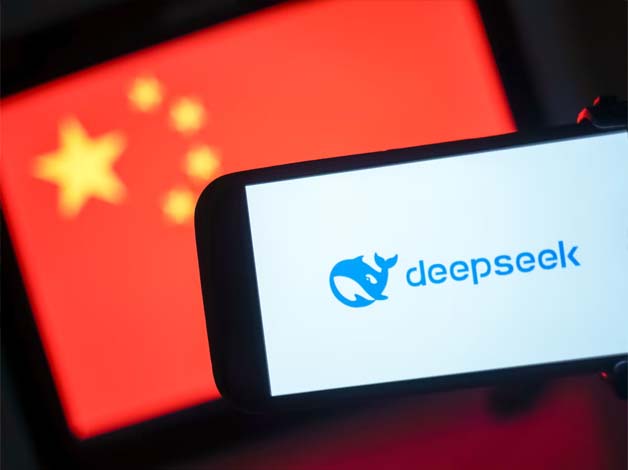
The launch of o3‑mini marks a significant milestone in OpenAI’s ongoing mission to democratize high‑quality, cost‑effective artificial intelligence. By optimizing for STEM domains and dramatically reducing operational costs, OpenAI is making it easier for enterprises and individuals alike to tap into advanced AI capabilities. Users are encouraged to explore o3‑mini’s features via ChatGPT and the Azure OpenAI Service, where the latest innovations—such as the newly released DeepSeek R1 available on Azure AI Foundry and GitHub—are already making waves.
Get Involved
OpenAI invites developers, businesses, and AI enthusiasts to test drive the new o3‑mini model and share their experiences. With enhanced safety measures, powerful reasoning, and flexible deployment options, this model is set to transform how we approach technical problem solving and AI‑driven automation. Interested parties are encouraged to subscribe for further updates and join the conversation on how o3‑mini can reshape enterprise AI applications.